
Excess sugar consumption from grazing on sweet snacks like biscuits, sweets and cakes disrupts your body’s blood sugar balance. Optimal blood sugar balance (the amount of glucose broken down from foods in your blood stream) is essential for healthy body composition: in other words, how and where fat, bone, muscle and water are distributed in your body.
Ongoing raised blood glucose can lead to weight gain and Type 2 Diabetes, a situation where cells are no longer responsive to insulin, the hormone that moves glucose out the bloodstream and into the cells to make energy. Excess glucose in the bloodstream attaches to red blood cells and makes blood stickier – not good for the circulation and blood vessels.
Apart from adding belly fat around your middle, sugar-overload depletes long-term energy and is addictive, so the more you have the more you need. Sugar is also inflammatory, meaning it can inflame skin and joints, and cause brain fog.
Glycemic Index
The first step to balancing blood sugar is choosing low glycemic meals and snacks.
GI rates a food based on how drastically it causes blood sugar to rise. Foods are ranked from 0 – 100, representing how quickly the body breaks down a carbohydrate and transforms it to basic glucose, with pure sugar (glucose) given a top value of 100. The more processed and sugary a food (a doughnut), the higher it’s GI. High GI foods provide an instant release of glucose and surge of energy, but effects are short-loved and replaced by a craving for another sweet snack. In contrast, the more fibre, fat or protein in a food, the lower its GI. Lower scores affect your blood sugar less and help you feel fuller for longer and more energetic.
· High GI foods have a rating of 70-100
· Medium GI foods have a rating of 55-69
· Low GI foods are 55 or below
Glycemic Load
GI only measures how quickly a food is converted to sugar – it doesn’t take into account the food’s portion size or how nutritious it is for you. Gycemic load (GL) on the other hand considers the amount of carbs in a typical portion and gives a better picture of its real-life impact on blood sugar and long-term energy levels.
Glycemic load is calculated by multiplying a food’s glycemic index by the grams of available carbohydrates in the serving and dividing by 100.
Watermelon, for example, has a high glycemic index (80) but a serving of water melon has so little carbohydrate combined with high water content that its glycemic load is only 5 – meaning you would have to eat an enormous amount to spike blood sugar.
Balance with protein, fibre and fat
Pairing a carbohydrate snack with protein, fibre and/or healthy fat puts the brakes on how quickly blood sugar levels rise.
A baked potato has a GI of (50) and GL (33). Yet, adding tuna will change this from a meal that had a large impact on your blood sugar levels to a more moderate one. Add a some fibrous vegetables like cucumber and baby spinach leaves and it’ll get even lower.
1. Fibre slows the rate of digestion and stops blood sugars from increasing as fast. Examples are complex carbohydrates such as wholemeal flour, and wholegrain pasta and rice.
2. Proteins are large complex molecules that are complicated to break down and take longer to be absorbed than carbohydrates.
3. Healthy fats keep food in the stomach for longer and add to feelings of fullness ie: avocado, nuts, seeds, nut and seed butters, a little cheese, yogurt, olive oil, olives.
Fruit and vegetable ripeness
Riper fruit and vegetables are higher in simple sugars and lower in resistant starch than under-ripe counterparts.
For example, the impact on blood sugars from a ripe banana will be much higher than in unripe one and it’s the same with potato. A baked potato has a much bigger impact on blood sugar than new boiled potatoes.
Low sugar satisfying snacks
· Unsalted almonds (small handful)
· Unsalted cashew nuts (small handful)
· 2 or 3 Brazil nuts
· Toasted seeds (small handful)
· Small handful dried mulberries
· Celery stick filled with no added sugar peanut butter
· Raw veggie slices with 1 tablespoon cream cheese or almond butter
· Slice of ham with 2 tomatoes
· Half an avocado with oil and vinegar dressing and a few toasted pine nuts
· Tuna, celery, cucumber, spring onions mixed with oil and vinegar dressing.
· 6 cubes of feta cheese with 6 olives and a handful of cherry tomatoes
· Half an avocado, chopped and mixed with toasted seeds
· Cup of instant miso soup and 1 or 2 rough oatcakes
· Hard-boiled egg & 2 sticks of celery
· 1 apple / peach / pear / kiwi or orange with 1 tablespoon nuts
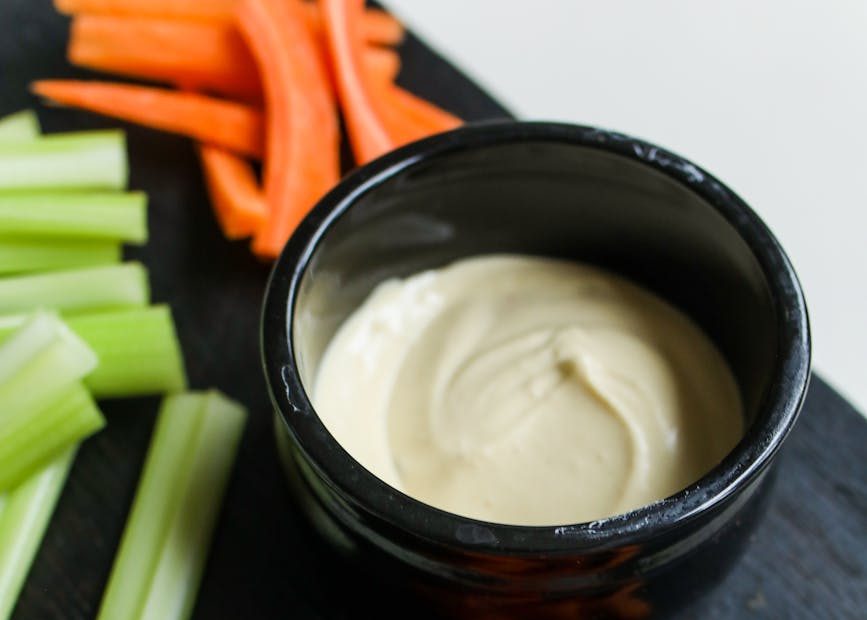
· Hummus and crudités
· Plain yoghurt with berries
· 6 cubes of cheese with 6 grapes
· 1 slice of Edam or hard mature cheese and slices of apple
· 100g berries (any variety) with handful of favourite nuts/seeds
· 2 oatcakes or rice cakes topped with a layer of the following: no sugar peanut butter / cashew nut butter / almond butter / pumpkin seed butter / hummus / smoked mackerel pate, taramasalata / smoked salmon and cream cheese / ham / cream cheese & cucumber
· 2 to 3 squares of dark chocolate with a few nuts
· Cream cheese on thin slice wholegrain / sourdough / rye toast
· Small tub of cottage cheese with 1 wholewheat cracker and/or chopped apple
· Baked apple with plain yoghurt and sunflower seeds
· Swap fizzy sugary drinks for sparkling mineral water or still water flavoured with mint or fresh fruit.
Emotional eating
Notice when you’re drawn to sugary snacks, for instance, if you’re bored, anxious, emotional, nervous.
· Have a glass of water or a herb tea
· Distract yourself by going for a walk, call a friend or read a book
Timings
Treat sweet snacks like a dessert and enjoy after a savoury lunch or dinner – so that the sugars are balanced as part of the overall meal: baked apple, 2 medjool dates, 2 squares dark chocolate.
Avoid carb-heavy snacks close to bedtime. If you need to eat something, choose a piece of fruit, an oatcake, two tablespoons plain yogurt, or a small handful of dried mulberries.
Sources
Harvard Health. 2023. The lowdown on glycemic index and glycemic load
Need nutritional support?
As a registered Nutritional Therapist, I can support you in your health journey. Working with me one-to-one, you’d receive personalised recommendations and support every step of the way to get to get your health back on track.
Get in touch to book a free 20-minute discovery phone call.
Leave a Reply